
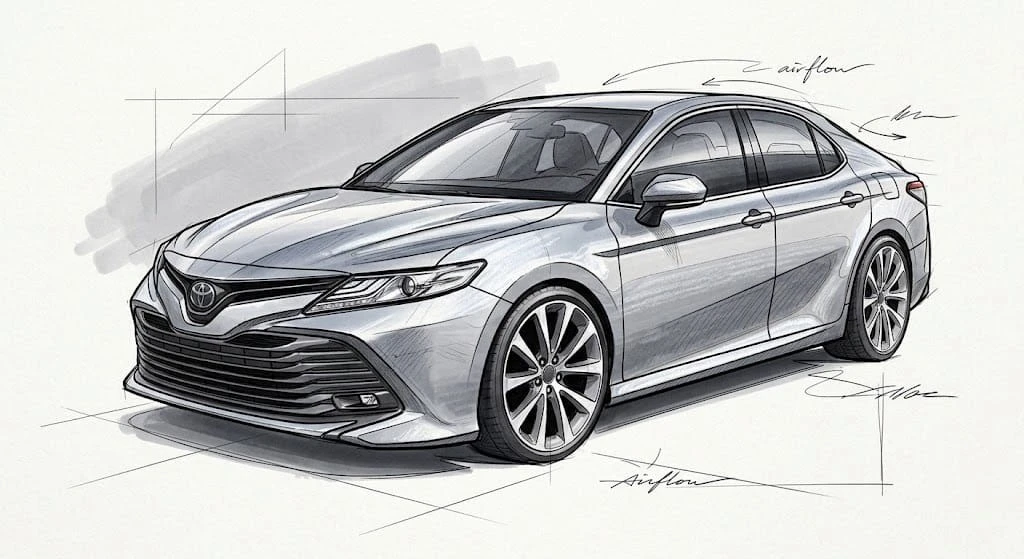
The Toyota Camry has been America’s default midsize sedan for so long that it’s easy to overlook just how much has changed under its hood in recent years. The 2027 model continues that shift. Every Camry now comes standard with a hybrid powertrain, there’s no traditional gas-only version left in the lineup, and fuel economy numbers that once belonged to compact hatchbacks are now available in a full-size family sedan. If you’re researching the 2027 Camry, you’re probably trying to answer three practical questions: what does it cost, how good is the fuel economy really, and did Toyota change anything meaningful this year. Here’s what buyers need to know.
Two hybrid powertrains are offered. The FWD models come with a 2.5‑liter four‑cylinder engine and two electric motors. The AWD versions add an electric motor that powers the rear axle. Neither is soul stirring but an AWD example reached 60 miles per hour in 6.8 seconds and achieved a best of 43 miles per gallon on our 75‑mile per hour fuel economy test, in C/D testing. Combined with an interior and good safety technology this car has what it takes to tackle the typical suburban shuffle.
Expert Tip:
All Camrys are hybrids; if you seek a mid-sized sedan but are not ready to go hybrid, you can downsize to the non-hybrid Corolla or cross-shop the Camry-sized Honda Accord LE and SE.
What’s New for 2027
The 2027 Camry is a continuation of the ninth-generation redesign that debuted for the 2025 model year, so there’s no fresh sheet metal, no interior overhaul, and no new engine this time around. Toyota introduced a major redesign just a couple of years ago, and there’s little business case for reworking a platform that’s still new to the market.
That doesn’t mean the Camry is standing still, though. It arrives for 2027 as a fully hybrid lineup, a distinction that separates it from rivals like the Honda Accord and Hyundai Sonata, which still offer non-hybrid four-cylinder engines as their base option. For Toyota, hybrid technology isn’t an upgrade you pay extra for anymore. It’s simply how the Camry works.
One important caveat: as of this writing, Toyota has not released final, official 2027 pricing or a confirmed on-sale date. Outlets like Edmunds, Car and Driver, and CarsDirect have published estimates based on current-generation pricing and past release patterns, but these figures should be treated as preliminary rather than locked in.
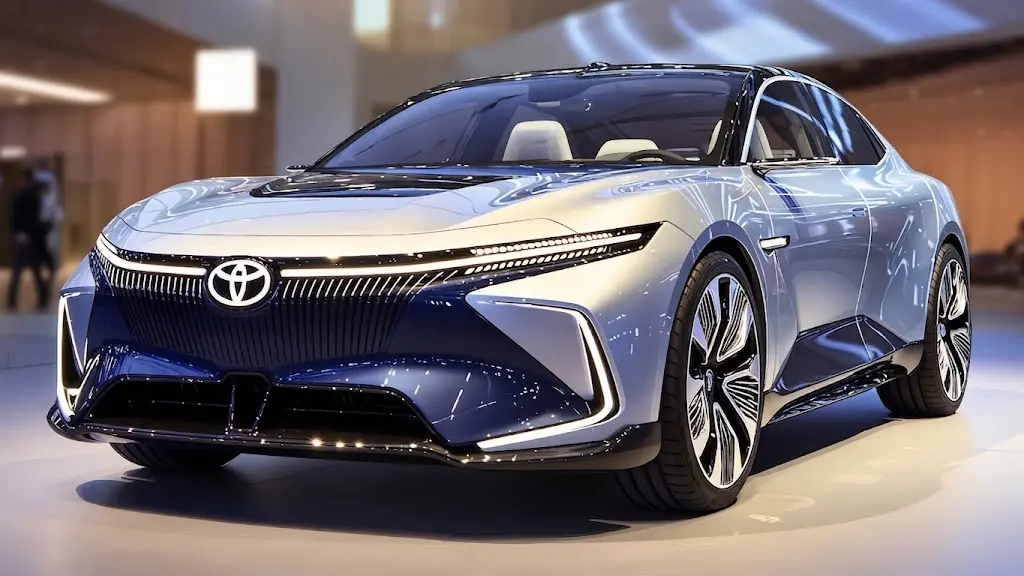
Engine, Transmission, AND Performance
Hybrid Powertrains: 2.5-liter four-cylinder and two electric motors, 225 hp combined (FWD) 2.5-liter four-cylinder and three electric motors, 232 hp combined (AWD)
Transmission: continuously variable automatic
Drivetrains: Front-Wheel-Drive, all-wheel-drive
The Camry Hybrid offers two hybrid powertrains, one supplying power to the front wheels and the other adding power to all four wheels.
The front‑wheel‑drive Camry Hybrid uses a 2.5‑liter four‑cylinder engine and two electric motors that work together to produce 225 horsepower while the all‑wheel‑drive Camry Hybrid adds an electric motor that powers the rear axle raising total output to 232 horsepower.
Both variants come with a variable automatic transmission and these hybrid powertrains are similar to those found in the Toyota Prius but instead of the Prius’s 2.0‑liter engine the Camry Hybrid uses a 2.5‑liter gasoline engine.
In our testing we were very impressed by how responsive the Camry Hybrid feels in city traffic thanks to the boost from the electric motors but honestly it is a bit rough when you give it a strong push.
The SE, XSE and Nightshade models are a bit more performance‑oriented because of their suspension and we did notice a clear difference, in how they corner in our XSE test car though the steering could use a little more finesse in our opinion.
0–60-MPH Times
- C/D 60-mph Test: 6.8 seconds (XSE AWD), 7 seconds (Nightshade FWD)
In Comparison: The last Honda Accord hybrid we got our hands on whizzed past 60 in 6.7 seconds, giving the Camry a run for its money but ultimately besting it; the Hyundai Sonata Limited Hybrid struggled to make it to 60 in just 7.7 seconds
Safety Technology
Standard driver-assistance features include adaptive cruise control, lane departure warning with lane-keeping assist, and automatic emergency braking with pedestrian and cyclist detection. Depending on trim, buyers can also add blind-spot monitoring, rear cross-traffic alert, and a 360-degree camera system. These features are less about flash and more about reducing driver workload during ordinary commuting, which fits the Camry’s overall mission.
PRICING: 2027 Toyota Camry
Estimated 2027 Camry pricing lands in a fairly consistent range across major auto sites. Car and Driver lists an approximate range of $30,995 to $38,920 depending on trim and configuration. Edmunds estimates a starting price around $31,000, and CarsDirect projects a similar starting figure near $31,200.
Release timing estimates also vary slightly. Edmunds points to a late 2026 arrival, while earlier CarsDirect projections suggested an August 2026 launch based on prior model-year scheduling. Since none of these dates come from an official Toyota announcement, it’s worth treating them as informed estimates rather than guarantees.
For context, that starting price sits well above the 2027 Corolla, which starts at roughly $23,325. The gap reflects a genuine difference in what you’re buying, not just badge inflation. The Camry offers more interior space, significantly more power, optional all-wheel drive, and access to considerably higher EPA fuel economy ratings depending on trim.
Interior, Technology, and Space
Inside, the Camry’s biggest strength is straightforward usability. The dashboard follows a horizontal layout, and Toyota wisely kept physical controls for climate functions rather than burying everything in the touchscreen. That’s a meaningful advantage in daily use, especially as more competitors move toward screen-only interfaces for basic functions.
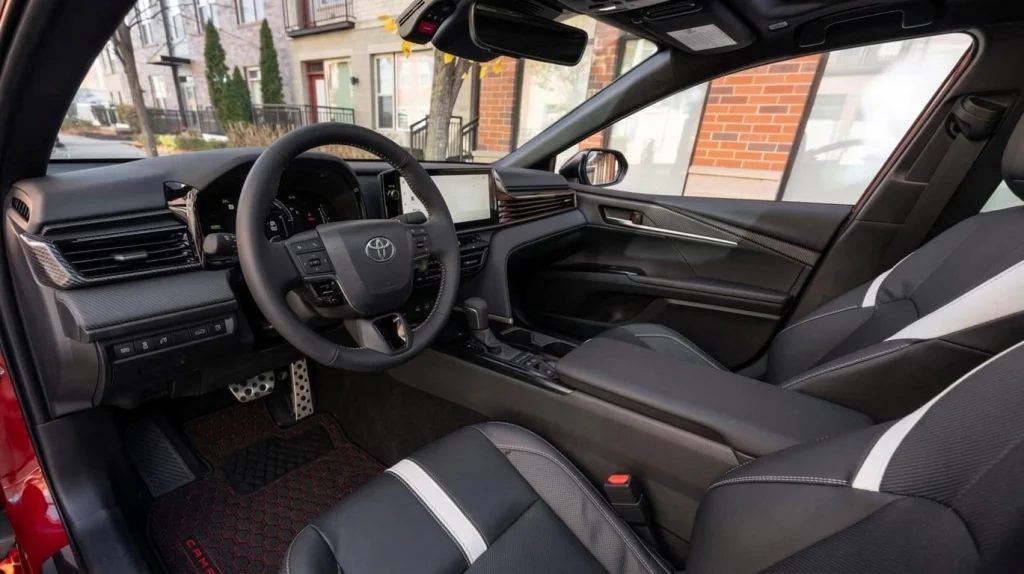
Depending on trim, buyers get either an 8-inch or 12.3-inch touchscreen, and higher trims add a 12.3-inch digital instrument cluster. Wireless Apple CarPlay and Android Auto come standard on most trims, along with wireless charging and multiple USB ports for front and rear passengers. A nine-speaker JBL audio system is available on upper trims. Higher-end models also add leather upholstery, heated front seats, a heated steering wheel, ambient lighting, acoustic laminated glass, and an auto-dimming rearview mirror.
Space is generally a strong point too. The Camry seats five, with plenty of front-seat room for adults, and the trunk offers about 15 cubic feet of cargo capacity, enough for everyday errands,
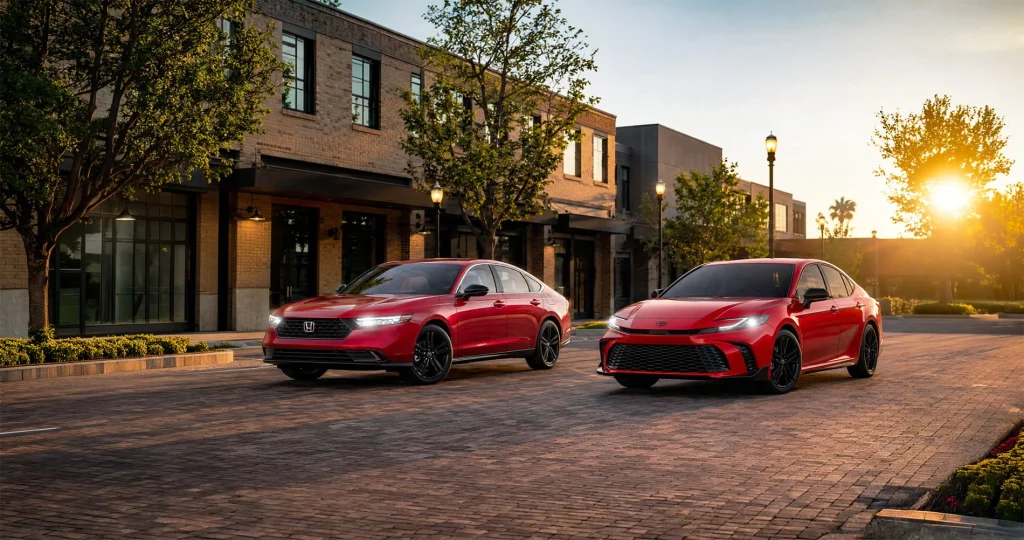
luggage, or a family road trip. There are a couple of trade-offs worth knowing about before you buy. Rear headroom can feel tight for taller passengers, and the Honda Accord offers roughly two inches more rear legroom according to Car and Driver. Edmunds has also noted that the front seats run a bit firm, though they hold up well on longer drives thanks to solid back support. None of this makes the Camry cramped, but it’s not automatically the roomiest option in its class either.
Design
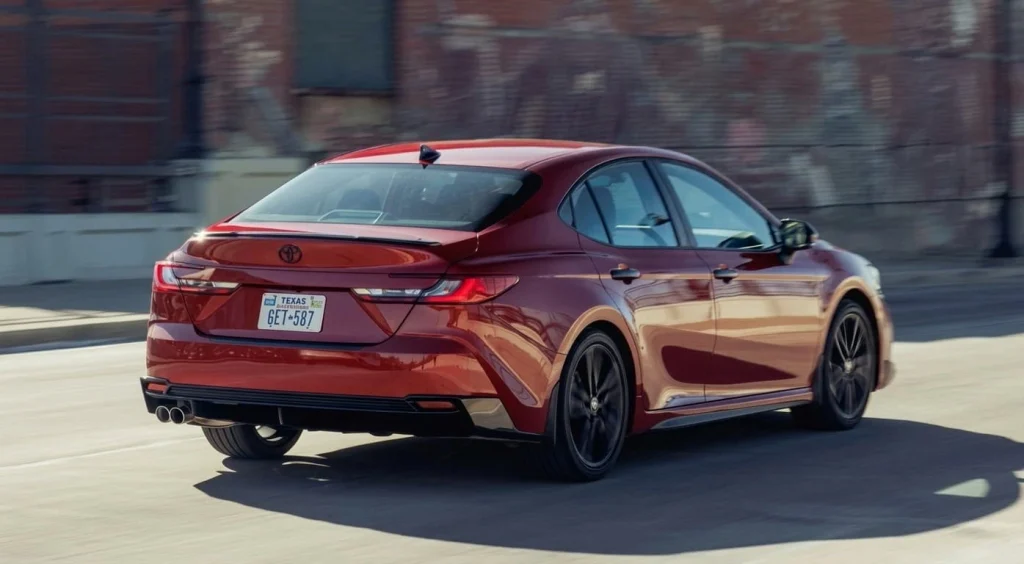
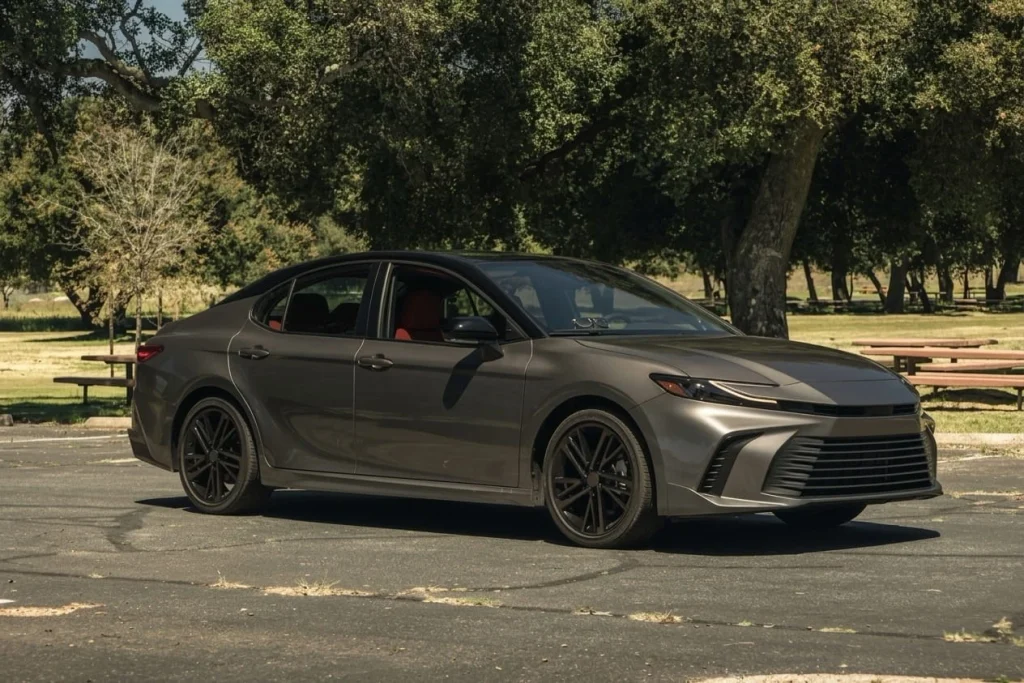
Toyota carried the current generation’s styling forward without major revision, and it’s aged well. The front end uses a wide, low fascia with a slim rectangular grille and a distinctive C-shaped headlight signature, paired with a large lower air intake that dominates the bumper. Angular side openings add visual width. It’s a sharper, more athletic look than older Camrys, without tipping into anything gimmicky.
Down the side, a defined character line runs from the front fender toward the rear, and black B-pillars create a more continuous glasshouse effect. The rear mirrors the front with matching C-shaped taillights and a subtle integrated spoiler shape, keeping the design consistent front to back rather than adding unnecessary aerodynamic flourishes.Trim level changes the car’s personality more than most buyers might expect. The SE, XSE, and Nightshade trims lean into a sportier, more aggressive appearance, while the XLE takes a more
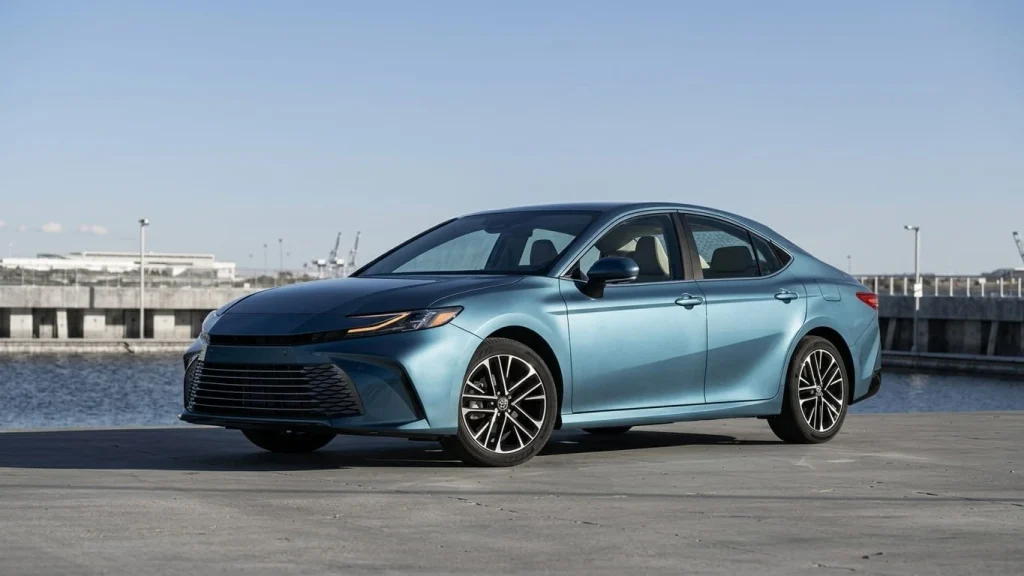
understated, comfort-focused approach. Compared to rivals like the Kia K5 and Hyundai Sonata, which tend to chase attention with more dramatic styling, the Camry plays it more restrained. That’s likely a deliberate choice. A family sedan needs to still look appropriate several years after purchase, not just impressive on the showroom floor.
Final Takeaway
The 2027 Toyota Camry isn’t trying to reinvent itself, and that’s exactly the strategy Toyota is banking on. With a hybrid-only lineup, available all-wheel drive, EPA ratings up to 51 mpg combined, and styling that’s aged into something genuinely confident rather than forgettable, the current formula still holds up. It won’t excite drivers who want sharp steering feedback or aggressive performance, and rear-seat space isn’t class-leading. But for buyers who want a practical, comfortable, fuel-efficient sedan that can handle daily commuting and long road trips without complaint, the 2027 Camry remains one of the smartest choices in its segment. Just keep in mind that final pricing and release timing haven’t been officially confirmed by Toyota, so it’s worth checking for updated figures as the model year approaches,
Let’s be real—the 2027 Toyota Camry isn’t going to sweep you off your feet when you first see it. You won’t get goosebumps from the steering on your favorite winding road, and if you floor it, the engine sounds a bit rough. Plus, if you’ve got tall friends or kids riding in the back all the time, you’ll probably like the Accord’s extra legroom better.
But that’s actually the whole point of the Camry. It doesn’t need to show off. It just does the job, day in and day out. You get through rush hour without stress, pack up the whole family for a road trip, and breeze past gas stations while everyone else is stopping to fill up. Every 2027 Camry is now a hybrid, hitting up to 51 mpg combined, and Toyota still puts good old-fashioned buttons on the climate controls instead of going all-in on touchscreens. That seems like a small detail, but it’s the sort of thing you notice and appreciate every time you drive.
Quick heads-up: at the time of this review, Toyota hadn’t locked in the final price or release date yet. It’s a good idea to check with your dealer or Toyota’s site for the latest info before you buy.
Bottom line? If you need a sedan that’s comfortable, fuel-efficient, and built to last—without any drama—the 2027 Camry is still one of the best choices out there. It might not give you butterflies, but it’s the kind of car you’ll never look back and regret owning
