Most drivers act like picking Engine Oil is a life-or-death mission, obsessing for hours over the perfect viscosity, the brand, the additives… and then, when it’s time to choose the 0il Filter, boom, five seconds and it’s in the cart. Let’s be real: the oil filter is literally the thing keeping gritty metal chunks from grinding up your expensive bearings, yet it’s usually an afterthought. If you’re wondering whether dropping extra cash on the “good” oil filters actually matters, I’ll save you some time — the answer is absolutely, but only if you make sure the filter actually matches your oil type and how long you go between changes.
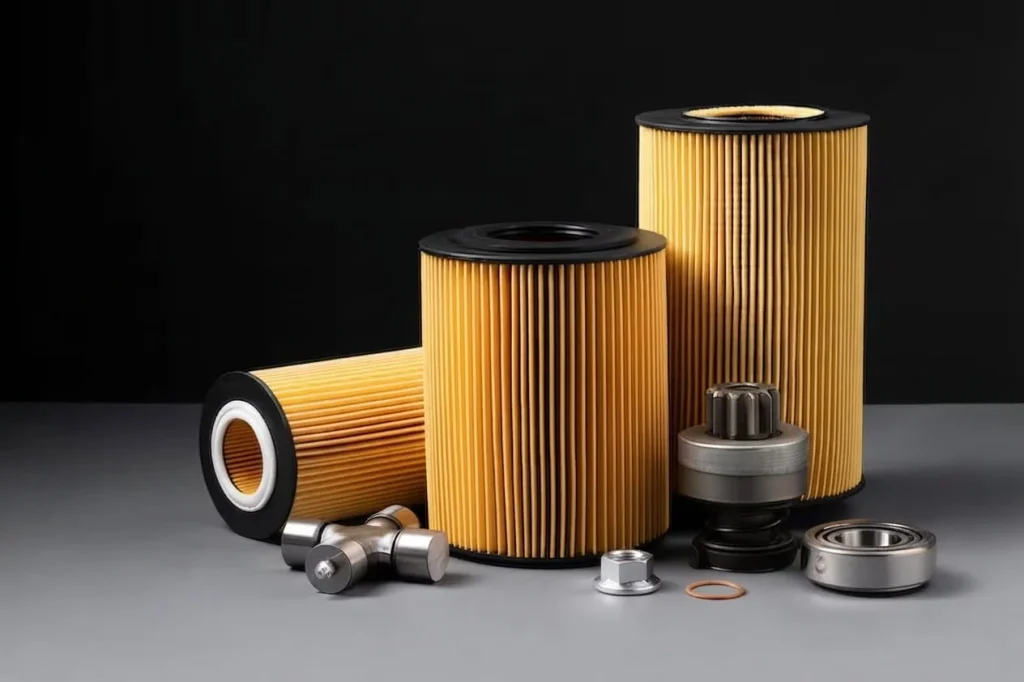
Here’s the deal: modern engines aren’t like your grandpa’s Buick. They run way hotter, burn through thinner fully synthetic oils, and manufacturers brag about 10,000-mile intervals between oil changes. Those cheap filters with a basic paper element and a rubber valve? They just weren’t designed for that kind of abuse. Over time, their rubber seals get brittle and leak, the filter media clogs up way before your oil does, and that cheap anti-drainback valve? It might not even hold oil in the engine overnight, so your bearings ain’t getting any love on cold starts.
This guide digs into the actual differences between bargain-bin filters and the top-tier ones, breaks down what really matters inside, and ranks the five absolute best oil filters you can get in 2026:
Plus, I’ll answer whether you actually need a specific filter for fully synthetic oil, if you need a turbo-specific filter, and even squash that constant debate about Wix vs NAPA Gold. Basically, if you want to keep your motor happy for the long haul, this is the deep dive you need (and the filter picks you deserve).
The Best Oil Filters at a Glance (Cheap vs Premium Oil Filters Compared)
Our top pick for most drivers is the Wix, while AMSOIL EA and Mobil 1 Extended Performance lead for long drain intervals. Efficiency figures below are manufacturer claims and are tested at different particle sizes, so compare them with care.
| Rank | Oil Filter | Claimed Efficiency | Rated Interval | Best For |
|---|---|---|---|---|
| 1 | Wix | 95% at 20 microns | Standard (5,000–7,500 miles) | Everyday driving, mechanic favorite |
| 2 | Mobil 1 Extended Performance | 99%+ at 30 microns | Up to 25,000 miles or 1 year | Full synthetic oil, long intervals |
| 3 | K&N Performance Gold | Captures 10–20 microns | Standard to extended | Turbo and performance engines |
| 4 | AMSOIL EA | 98.7% at 15 microns | 15,000–25,000 miles | Best synthetic oil filter for extended oil change |
| 5 | Bosch Distance Plus | 99.9% (claimed) | Extended | Cold starts |
Cheap vs. Premium Oil Filters: What Really Makes the Difference
Here’s the truth: the real gap between cheap oil filters and premium oil filters comes down to four key things. And whenever a company tries to cut costs, one of these usually pays the price.
Let’s start with the filter media itself. Cheaper filters almost always use basic cellulose paper. It’s not great at catching the tiny debris in your oil, and it clogs faster. Higher-end filters don’t mess around here. They’ll use synthetic fibers or even glass blends — stuff that grabs more grit and keeps your oil moving cleanly for longer.
Then there’s the anti-drainback valve. If you go cheap, you usually get a plain rubber valve. Too many hot and cold cycles, and it hardens up. Oil leaks out overnight, so you get those rough, noisy dry starts in the morning. Step up to a premium filter, and you’re looking at a silicone valve. Silicone stays flexible, no matter how hot or cold it gets, so it actually seals and keeps oil where it should be.
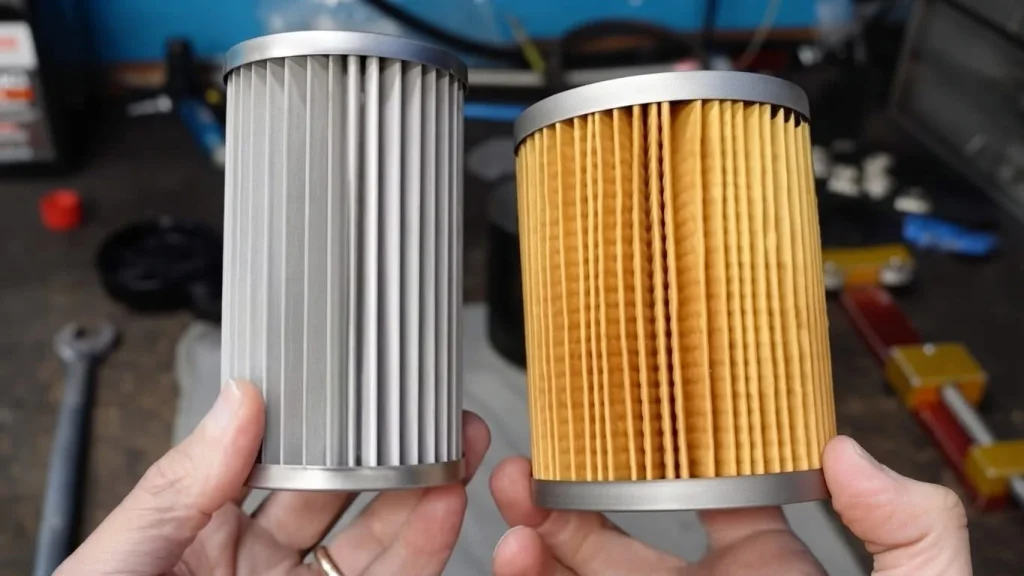
Seals and gaskets come next. The bargain filters use basic materials that get brittle or even stick themselves to the engine, making the next oil change a mess. Premium brands go a step further. Bosch uses PTFE on its gaskets, Mobil 1 goes for nitrile — both up their game for a flexible, durable seal that’s much easier to deal with down the road.
Finally, let’s talk about the canister and end caps. Thinner metal shows up on cheaper filters, and heavy oil pressure (like on a cold start) can bend, dent, or even split them. The higher-end filters, like K&N, use thick steel bodies and metal end caps that can take a beating — no issues, no drama.
Honestly, if you’re the type who changes their oil every 3,000 miles with basic oil, you probably won’t notice these upgrades. But once you switch to synthetic oil and stretch your intervals out, all those small differences really start to matter. That’s when you want a filter that actually holds up.
5 Bosch Distance Plus: Best Oil Filter for Cold Starts
Here’s the optimized version for the Bosch Distance Plus section:
Bosch Distance Plus (Cheap vs Premium Oil Filters Compared)
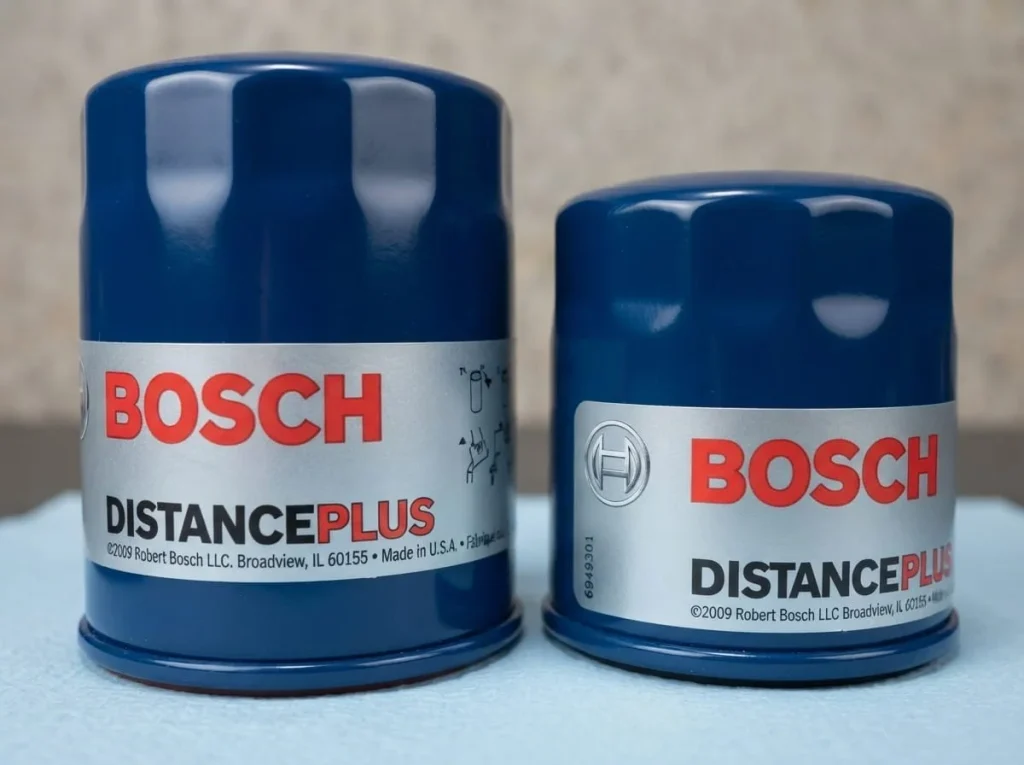
The Bosch Distance Plus takes the crown here for cold-start protection. That’s when your engine’s most vulnerable, right after you turn the key, and Bosch’s valve and gasket are totally geared for that crucial moment.
Bosch claims their synthetic fiber media traps up to 300% more gunk than a run-of-the-mill filter — basically 29.1 grams instead of just 7.4. All that while keeping 99.9% efficiency, so you’re not sacrificing protection. If you’re running synthetic oil and stretching out your intervals, that extra dirt-holding capacity comes in handy. The can itself is built tough, with practically double the burst resistance compared to basic filters — great if you’ve got a turbo or just drive a little harder.
What makes it stand out:
- Silicone anti-drainback valve: Keeps oil in the filter overnight, so you’re not starting with a dry engine.
- PTFE-coated gasket: Slides on easily, resists tearing, and doesn’t turn brittle whether you’re in Arizona or Alaska.
- Oil compatibility: Plays nice with both synthetic and conventional oil.
Pros:
Big dirt capacity, tough gasket, way better burst strength than entry-level filters.
Cons:
Same 720 cm² filter surface as the Bosch Premium, so the real upgrade is the beefier O-ring and thicker walls.
Best for:
People in cold climates, or anyone doing a lot of short, stop-and-go trips.
👉 Want more real-world proof? Watch our cut-open filter tests on the Car Care Hub YouTube channel or check the full ranking in our Best Oil Filters at a Glance table.
4 AMSOIL EA: Best Synthetic Oil Filter for Extended Oil Change Intervals
Honestly, if you’re hunting for a synthetic oil filter built for long oil change intervals, it’s tough to beat the AMSOIL EA. They throw down a big claim: 98.7% efficiency at snagging 15-micron particles, tested under ISO 4548-12. That’s seriously sharp, especially when you realize that standard cellulose filters are just bumbling along, grabbing maybe 40 to 80% of junk at that particle size. The worst part? The bits in the 15–20 micron range are exactly the ones that grind away at your bearing surfaces, slowly but surely wearing down your engine.
The reason the EA filter performs so well is all in that synthetic nanofiber media. The fibers are thinner than you’d believe, and they’re packed so there’s barely any space between them. Instead of having the dirt dive deep into the filter, it all collects right on the surface where you can catch it easily. That, honestly, is kind of genius — paper filters just can’t keep up. With old-school filters, gunk gets trapped inside, blocking oil flow before you know it. Not so with this setup.
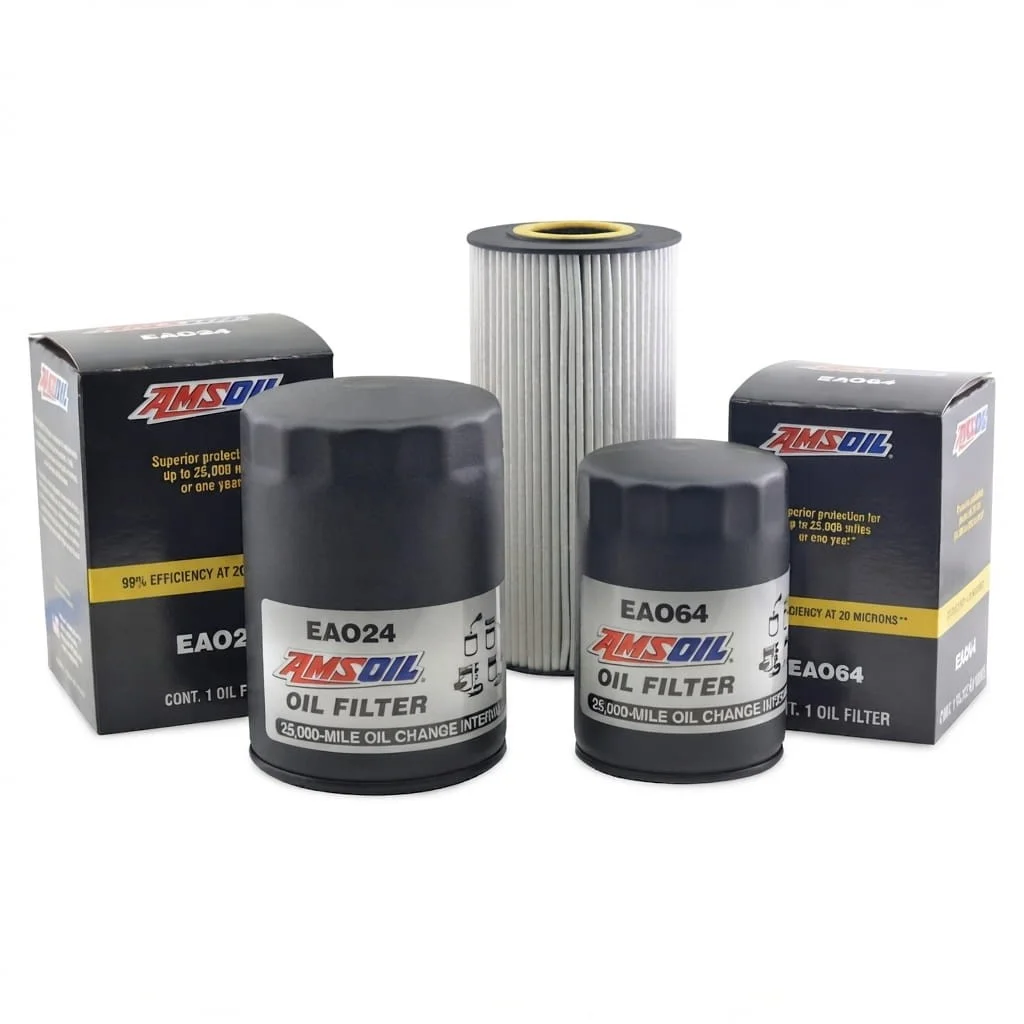
There’s some flexibility too. The EA line splits into two: the EA15K, which you can run for up to 15,000 miles, no matter how you drive, and the EAO, which stretches it to a wild 25,000 miles if you’re not beating on your car every day, or 15,000 if you’re really rough on it. Same filtering magic, just different recommended intervals.
Build quality is another strong point. The seams are neat and tucked away, nothing exposed. You get a molded seal on the filter element, so no slow leaks after installation. The threads are roll-formed, not hacked in, which means less chance of cross-threading during those groggy Sunday morning oil changes. And there’s a silicone anti-drainback valve, so your filter can handle repeated heat cycles without turning into a drippy mess overnight. AMSOIL also tweaked the can design, so it’s a little chunkier — easier to grip when your hands are slippery and holds nearly twice as much as the older cans.
What do you actually get?
Top-notch filtration, a bigger payload of junk before clogging up, and a filter that sticks around for ages.
3 K&N Performance Gold: Best Oil Filter for Turbocharged Engines
If you’re looking for an oil filter for a turbocharged engine, the K&N Performance Gold HP stands out. Its burst strength and flow rate are impressive. K&N says the shell handles up to 550 PSI, so it’s ready for the pressure spike you get when a turbo engine fires up cold.
This filter grabs particles between 10 and 20 microns, but still lets up to 16 gallons a minute flow through. A lot of filters force you to choose: trap more dirt but restrict the oil, or let the oil flow fast but miss the finer stuff. K&N doesn’t make you compromise.
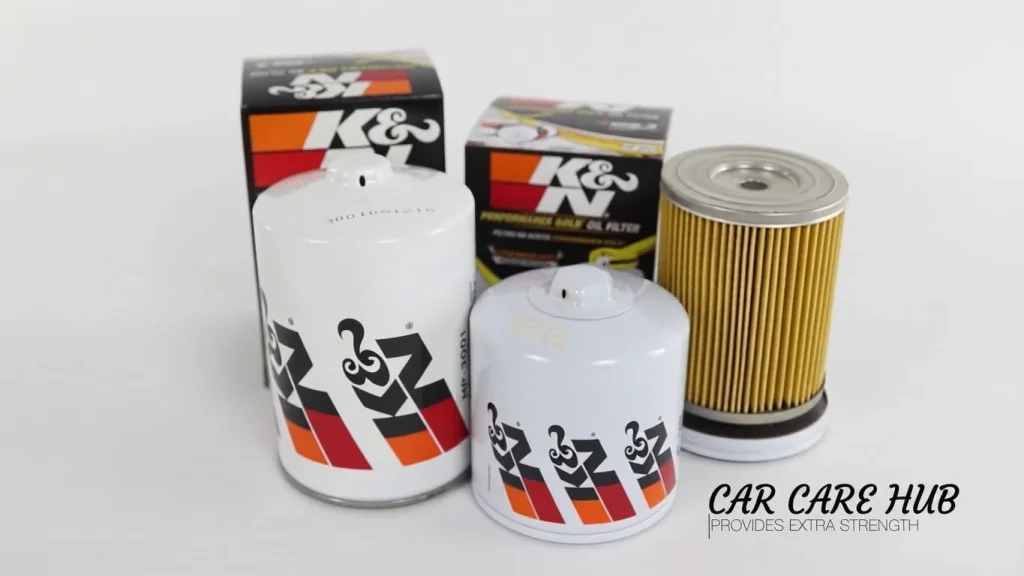
It’s got metal end caps instead of paper, so dirty oil can’t sneak around the filter media. The metal leaf spring keeps everything snug and won’t soften the way paper-backed options do. The gasket comes pre-lubed, which makes installation and removal less of a headache. The welded hex nut means you can use a wrench to remove it, and it’s already drilled for a safety wire — perfect for track days.
The HP Gold comes in both spin-on canister and cartridge types, so it should fit a bunch of different vehicles.
2 Mobil 1 Extended Performance: Best Oil Filter for a 20,000 Mile Oil Change
If you’re searching for the best oil filter for a 20,000-mile oil change, it’s hard to go wrong with the Mobil 1 Extended Performance. It’s rated for up to 25,000 miles or one year, so it actually outlasts the interval you’re aiming for. Plus, Mobil 1 stands behind it with a manufacturer warranty, which adds a little peace of mind.
Mobil 1 claims this filter catches over 99% of harmful contaminants, and that’s based on the ISO 4548-12 test at 30 microns. Basically, it does a solid job keeping your oil clean over those long drain intervals. Instead of using pure synthetic glass like you’ll see in the Purolator Boss or Royal Purple Extended Life filters, Mobil 1 sticks with a synthetic fiber blend. It’s a slight difference, but worth noting if you’re comparing high-end filters side by side.
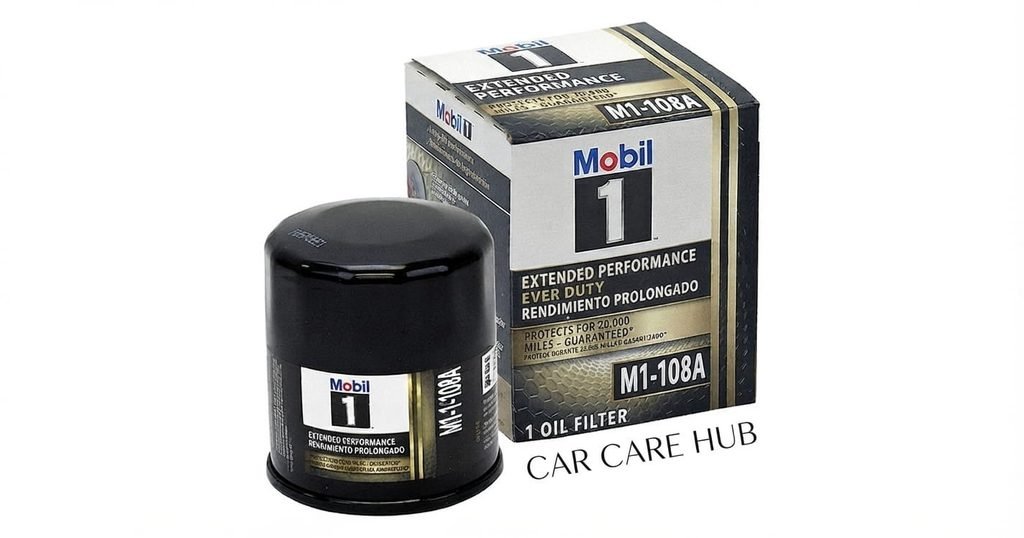
Inside, you get a steel center tube—that’s what supports the filter media and keeps oil flowing evenly, even as the filter fills up with dirt. This thing’s pressure rating is impressive, too. The canister is built to handle nine times the normal oil system pressure (thanks to ISO 4548-6 standards), and that’s especially important if you’re running a turbocharged engine or working your car hard.
The details matter here: it uses a nitrile gasket that stays flexible and stands up to oil breakdown, so leaks are much less likely. There’s an anti-drainback valve built in too, which keeps oil from draining out when the engine sits. That means you avoid those dry starts that can hurt your motor over time.
Another plus—this filter works with any type of oil you want to use, whether it’s conventional, high-mileage, synthetic blend, or full synthetic. And it doesn’t matter if your car takes a spin-on or cartridge filter, the long-life rating applies to both styles.
So what’s good? You get documented test standards, a filter designed for truly long intervals, and the backing of a major warranty. On the downside, you’re only getting your money’s worth if you actually stretch your oil changes out—if you don’t, there’s not much point paying extra for this level of filter.
Bottom line: the Mobil 1 Extended Performance is really a top choice if you’re already committed to Mobil 1 full synthetic oil and want to maximize your time between services. For anyone clocking serious miles, it’s a dependable upgrade.
1 Wix: The Best Oil Filter Brand Mechanics Trust
Wix lands at the top of the oil filter list for good reason—it’s reliable, does its job well, and has been doing so since the 1930s. Mechanics stick with Wix because it works year after year, no fuss.
The numbers back it up: Wix claims 95% efficiency at 20 microns and a flow rate between 11 and 13 gallons per minute. That’s plenty for just about any street car. They use a glass and cellulose media. It’s not flashy, but it’s tried and true. Most drivers stick to oil changes around every 5,000 to 7,500 miles, and Wix handles that easily.
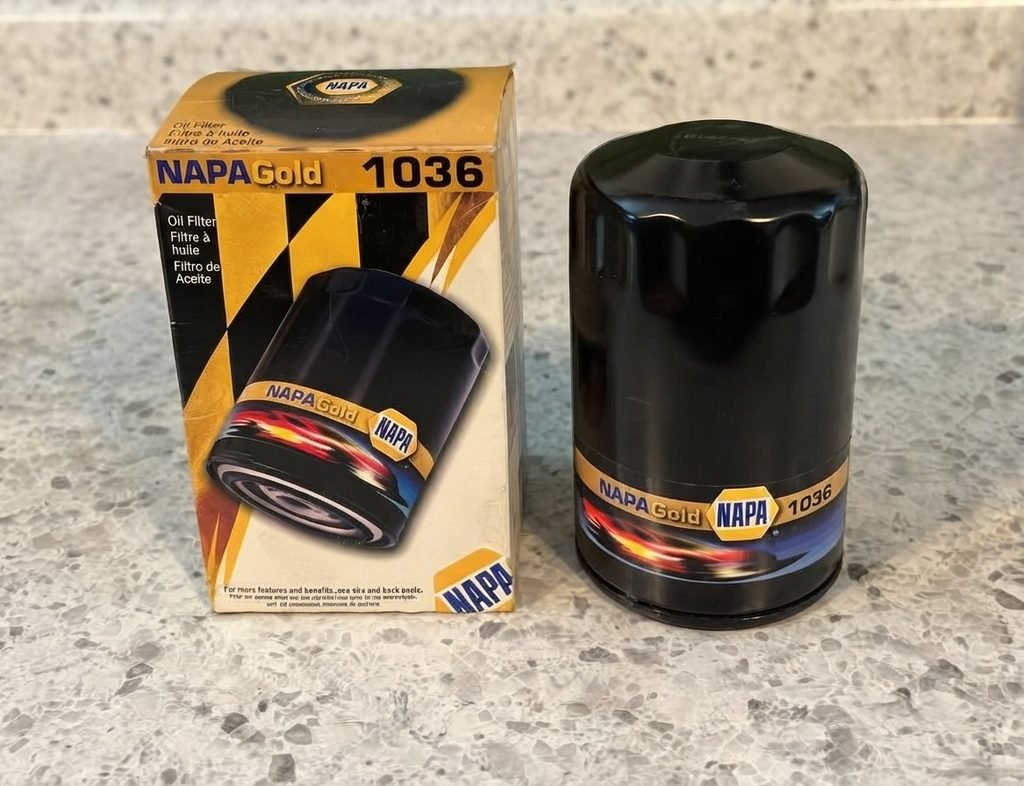
Now, about the whole Wix vs. NAPA Gold thing. For ages, NAPA Gold filters were basically Wix filters with a different label. Not anymore. Wix belongs to Mann+Hummel now, and teardown videos show their insides aren’t identical. Different media, different springs, you name it. If you want a real Wix, just make sure it says “Wix” on the can.
Wondering whether you need the Wix XP or just the standard filter? The XP has fully synthetic media and filters down to 15 microns. It’s better if you run full synthetic oil and go for longer intervals between changes. Otherwise, if you stick to regular oil and change it at the standard mileage, you’re fine with the regular Wix. No need to spend extra.
Pros: solid reputation, fits a ton of vehicles, priced right.
Cons: standard filter isn’t meant for long oil change intervals and NAPA Gold isn’t a guaranteed Wix anymore.
Best for: drivers who stick to regular oil changes and want dependable performance.
Are Expensive Oil Filters Worth It?
Are pricey oil filters worth coughing up the extra cash for? Well, kinda depends on how you treat your car. If you’re running full synthetic oil, got a turbo under the hood, do lots of those quick, frosty morning start-ups, or like to stretch out your oil changes for ages—yeah, those fancy filters actually make sense. But if you’re old-school and dumping cheap oil every 3,000 to 5,000 miles, a mid-range filter will do just fine. No need to drop extra coin.
Honestly, don’t expect your engine to suddenly purr like a content kitten just because you shelled out for a premium filter. The main benefit’s longevity: they trap more tiny stuff, have a anti-drainback valve to keep oil from draining out overnight, and the seals usually last longer without getting crusty. Plus, let’s be real—the difference in price is often just, what, a few bucks? Way cheaper than frying your engine.
But here’s where people mess up: slapping a high-mileage filter on a car you baby with frequent cheap-o oil changes is just burning money. And worse, if you use a bargain bin filter but try running 15,000 miles between changes with fancy synthetic oil, the filter could pack it in long before the oil’s tapped out. Match your oil filter to your oil and your habits, or you’re just asking for trouble.
| Your situation | Best pick | Why |
|---|---|---|
| Full synthetic oil, 15,000+ mile intervals | AMSOIL EA | 98.7% at 15 microns, long rated life |
| Full synthetic, running Mobil 1 oil | Mobil 1 Extended Performance | Up to 25,000 miles or 1 year, warranty |
| Turbocharged or track-driven engine | K&N Performance Gold | 550 PSI burst rating, 16 GPM flow |
| Cold climate or short trips | Bosch Distance Plus | Silicone valve, PTFE gasket |
| Regular 5,000–7,500 mile changes | Wix | Proven, fairly priced |
(Cheap vs Premium Oil Filters Compared)
The best oil filter is the one that fits your engine, suits your oil and your interval, and comes from a trusted seller. AMSOIL EA and Mobil 1 Extended Performance make sense for extended intervals, K&N Performance Gold for hard-working engines, and Bosch Distance Plus or Wix for everyday use. Whichever you pick, check the claims against the maker’s own spec sheet, and avoid fakes and filters that cannot back up their marketing.
Disclaimer: This article is for general information only. Specifications are manufacturer claims and can change. Always follow your vehicle’s owner’s manual for the correct oil, filter and service intervals, and consult a qualified mechanic for advice about your car. Car Care Hubs has no commercial relationship with any brand mentioned.
I’m Mike, and I run the Car Care Hubs YouTube channel and website. I haven’t lab-tested the filters in this guide myself, so I built it from the manufacturers’ published specifications, the ISO 4548-12 test standard and the independent test data I could find. Where a figure is a manufacturer claim, I’ve said so. As I test and compare more filters on the channel, I’ll update this article with what I find.